Study Overview
When thoughtfully integrated, cycling and high-quality public transportation together offer a practical alternative to car ownership. This article is part of a pilot study in which we analyze the experience of riding a bicycle and riding rail transit through an open toolkit of experiential data-collection methods and report on their use in Encinitas, California—a small city of 62,000 residents that features one of eight COASTER commuter rail stations along the 41-mile route. This rail line connects the north coastal area of the San Diego metro region to Downtown San Diego.
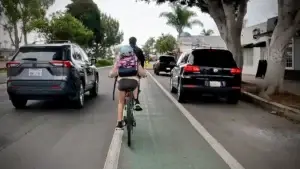
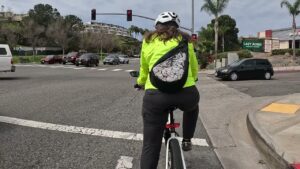
I used the Think-Aloud Protocol, in which I recorded video of the subject riding their route from a camera mounted on my bike while I rode behind them. The subject also wore a wireless microphone clipped to their shirt, and they narrated their experiences and feelings in real time. This method is immersive for the audience because they can see what the subject is experiencing and hear how the subject feels.
This segment features Jennifer, a 50-year-old woman who regularly rides her bike and uses transit. She lives in Europe and has traveled extensively worldwide, so she has a solid understanding of how active transportation infrastructure and transit systems function in other countries and cities.
Jennifer’s Route
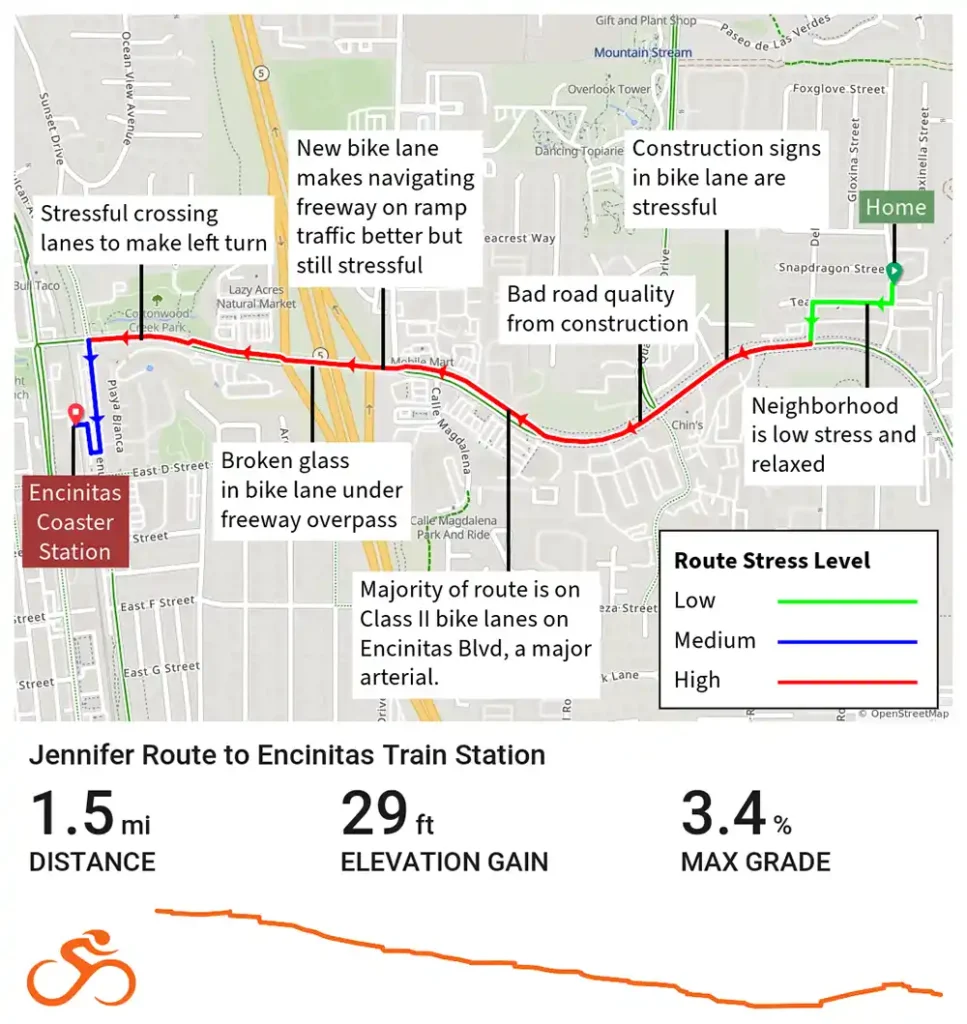
This route represented the most direct path from Jennifer’s home to the Encinitas train station. Jennifer noted that she only chose this route because it was a Sunday and traffic would be light. If she were riding on a weekday or during rush hour, she would probably choose a different route.
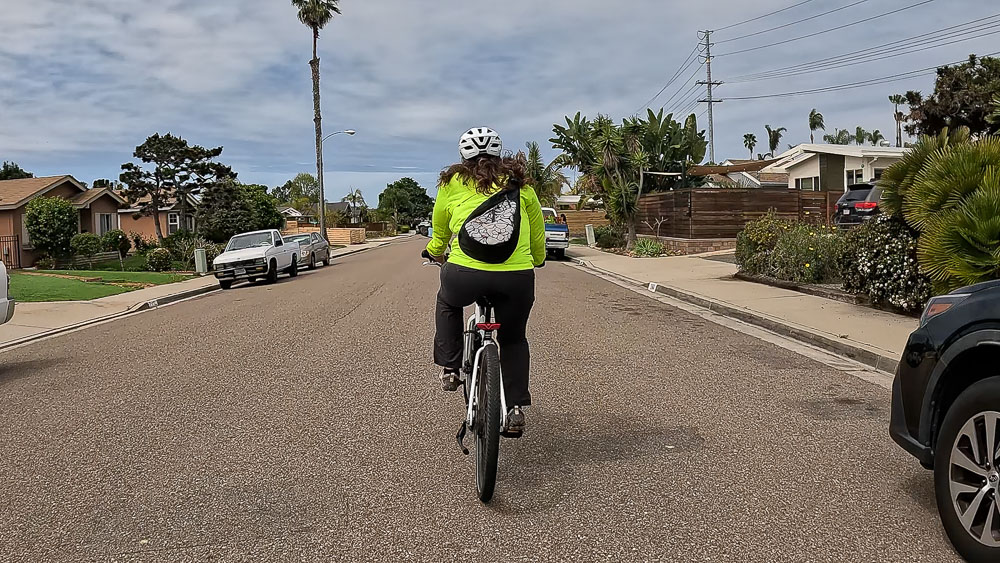
Jennifer began her journey at her home in the Pacific Serena neighborhood, about a mile and a half from the train station. She starts on a couple of quiet, low-stress residential streets before turning onto Encinitas Blvd, one of the largest and busiest arterials in Encinitas. Jennifer rides on a combination of Class II and buffered Class II bike lanes along Encinitas Blvd.
Currently, there are two major housing construction projects. Large electronic construction signs have been placed in the bike lane. Fortunately, the sign is placed at an outward curve, so cyclists can ride around it without having to veer into heavy, fast traffic.
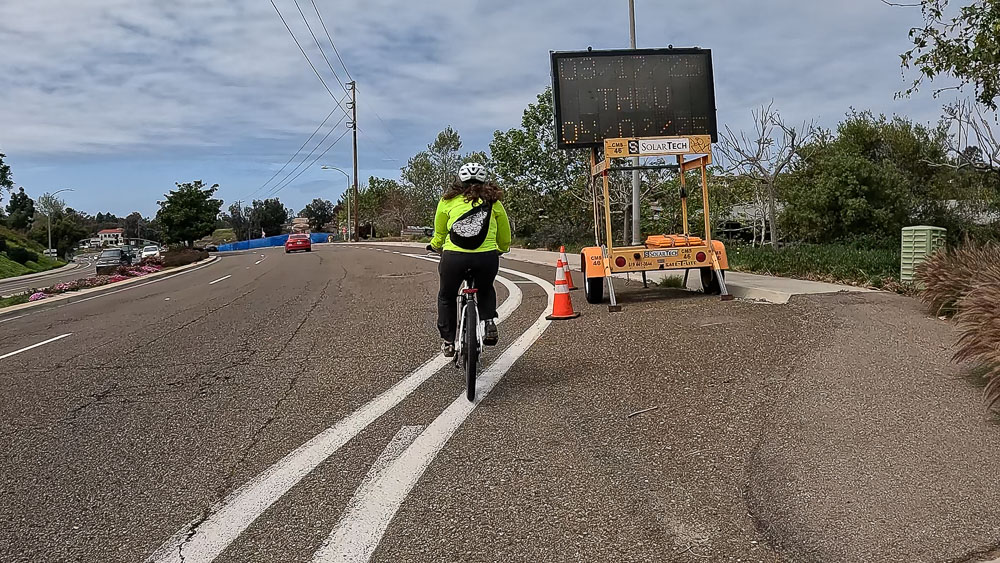
In addition to the construction signs, the asphalt has been torn up from utility trenching. Metal trench plates span the road, and construction debris is scattered across the bike lanes.
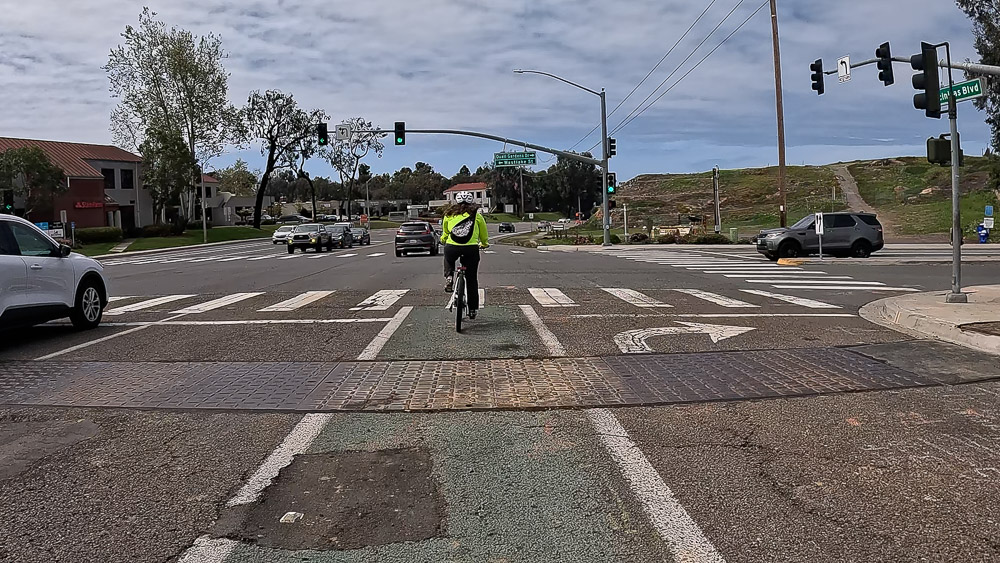
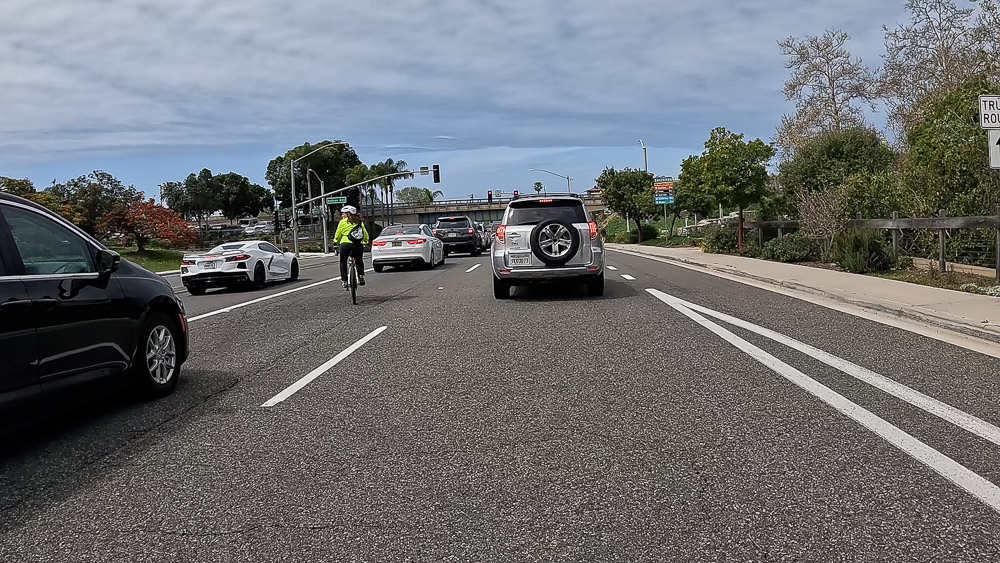
After Jennifer gets through the construction zone, she enters a commercial district with multiple businesses and driveways. This section also marks the entrance to Interstate 5. There’s usually heavy congestion, and motorists constantly change lanes to enter the correct freeway lane.
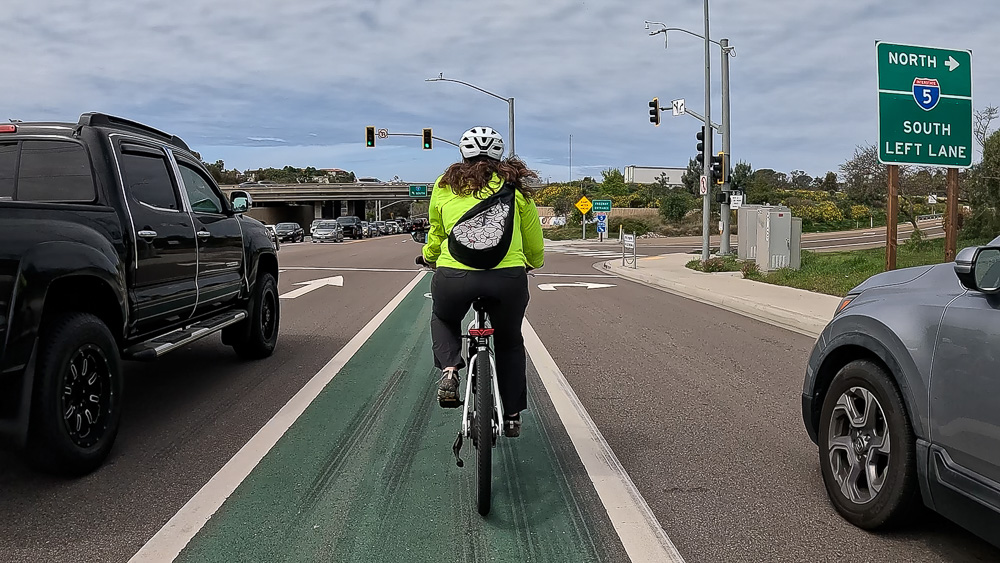
Until recently, the Class II bike lane was located on the far right side of the two right-turn lanes leading onto Saxony Dr. and onto Interstate 5. This placement made cyclists vulnerable to right-hook collisions from motorists turning right from either of the two lanes. The bike lane has since been rerouted to run between the Encinitas Blvd through-traffic lanes and the right-turn lanes for Saxony Rd and the northbound Interstate 5 on-ramp.
Jennifer states that she is pleased that a new bike lane was painted, positioning cyclists to the left of traffic turning right onto the northbound I-5. However, she remains anxious because drivers often wait until the last moment to change lanes into the exit lane, which threatens her safety in the unprotected bike lane.
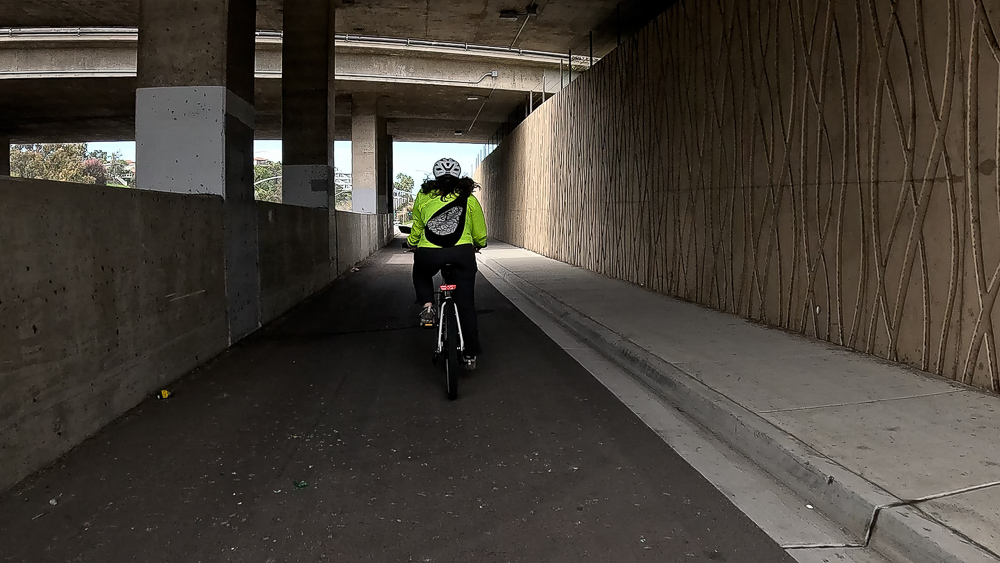
After Jennifer passes the freeway exit, she enjoys a short stretch of Class IV separated bikeway beneath the freeway. Unfortunately, on the day of our ride, someone had smashed glass bottles against the separator wall, scattering broken glass across the bike lane.
After passing under the west side of the freeway, the separated bikeway returns to a Class II bike lane, where Jennifer navigates motorists turning right into a popular shopping center. Her bike lane then becomes a slip lane for motorists turning right into the shopping center. As she waits for the red light to change, she defiantly comments that right-turning motorists can wait for the light to change.
Since it’s a Sunday morning, traffic is lighter than usual. Jennifer feels confident enough to safely cross the travel lanes and move into the left-turn lane. She notes that if it were a weekday or if traffic were moving faster, she would instead make a two-stage turn—first riding straight across the Encinitas Blvd/Vulcan Ave intersection, then waiting to cross Encinitas Blvd on a green light from Vulcan Ave.
On the western end of Jennifer’s route near the train station, there is a half block of Class II bike lane on Vulcan Ave before turning into the Encinitas Coaster Station parking lot. She finds it easier to ride through the parking lot and across the track crossing.
Jennifer is a frequent train rider, so she has a PRONTO pre-paid fare card. This allows her to scan the card before her trip rather than needing to use a credit card or cash at the kiosk. She needs to scan her card at her destination to calculate her fare.
Once the train arrived, Jennifer had to locate a car that allowed bicycles, which was clearly marked with a bicycle symbol. Jennifer easily boarded the train with her bike, and the train was fully loaded with multiple bikes. While space was limited, other patrons were courteous and allowed her to find a place to stand with her bike.